

How to Childproof a Pantry with Mixed Door and Drawer Styles
Are you worried that your toddler might open an unsafe cabinet or drawer in a pantry with a mix of doors, deep pull-outs, and standard drawers? A practical childproofing plan does not require every opening to use the same solution. Start by identifying what your child can reach, what is stored behind each opening, and which cabinets or drawers have enough interior space for a compatible latch.
For childproof pantry mixed cabinet styles, the goal is to add layers of protection: relocate the highest-risk items, secure reachable hazardous storage, create a parent-approved lower access area, and continue to supervise as your child's abilities change.
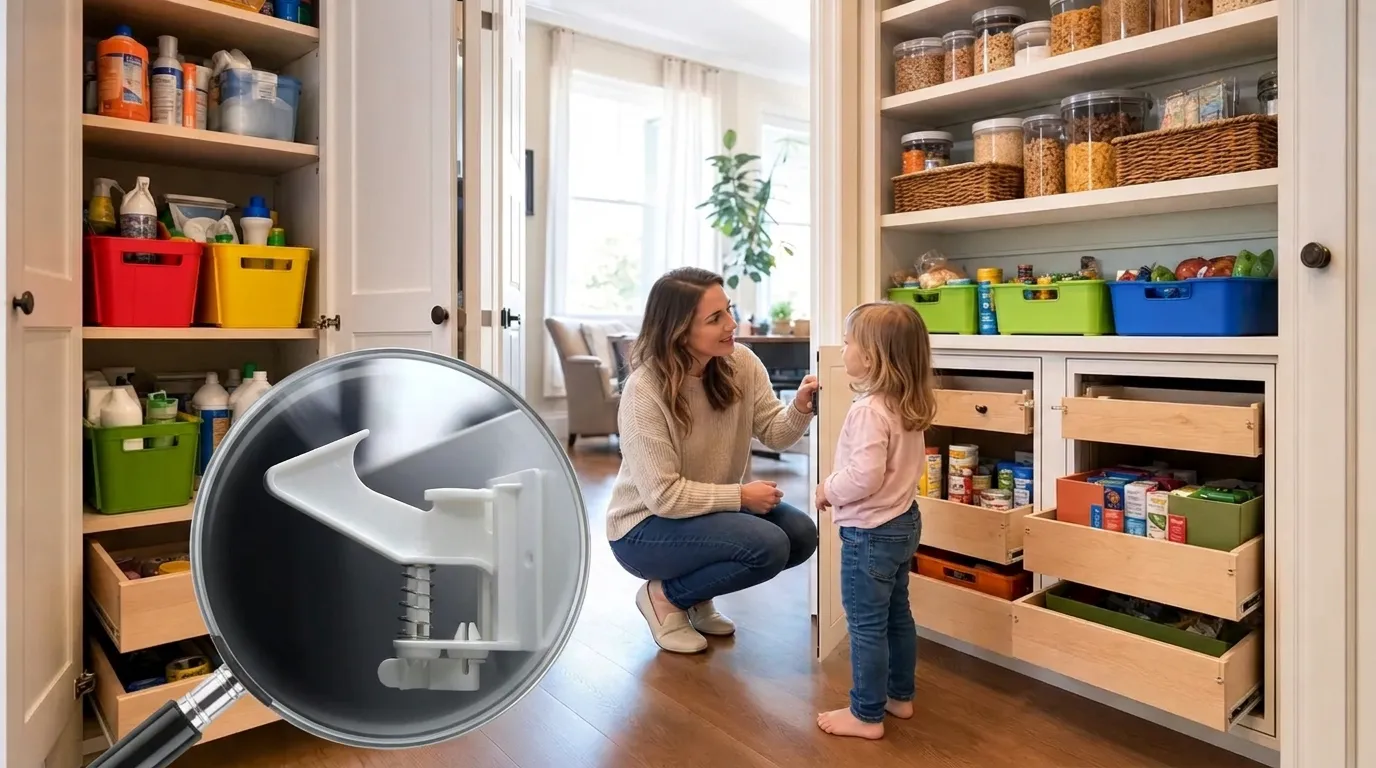
Childproof pantry mixed cabinet styles: Start with a reach and hazard check
Look at the pantry from your toddler's height. A lower drawer that seemed harmless a few months ago may now be easy to pull open. A bar handle, knob, recessed pull, or partially open drawer can all become an invitation to explore or climb.
For each pantry door and drawer, ask:
- Can my child reach it now, or will they likely reach it soon?
- Could opening it expose something unsafe, heavy, breakable, or small enough to cause concern?
- Could an open drawer become a climbing step?
- Is there a safe interior mounting area if I want to use child safety cabinet locks?
The U.S. Consumer Product Safety Commission recommends safety latches and locks for cabinets and drawers that may contain medicines, cleaners, sharp objects, laundry products, matches, and other household hazards. It also recommends keeping hazardous products locked up and out of children's reach.
| Pantry opening | What to assess | Typical priority |
|---|---|---|
| Lower hinged cabinet | Cleaners, glass, plastic bags, small items | High if reachable |
| Double-door cabinet | Whether either door provides access to hazards | High if reachable |
| Standard drawer | Scissors, batteries, clips, tools, utensils | High if hazardous |
| Deep pull-out drawer | Heavy cans, jars, appliances, climbing potential | High to medium |
| Upper shelf | Whether a child can reach it by climbing | Reassess regularly |
| Lower safe shelf | Lightweight, nonbreakable parent-approved items | Safe-access candidate |
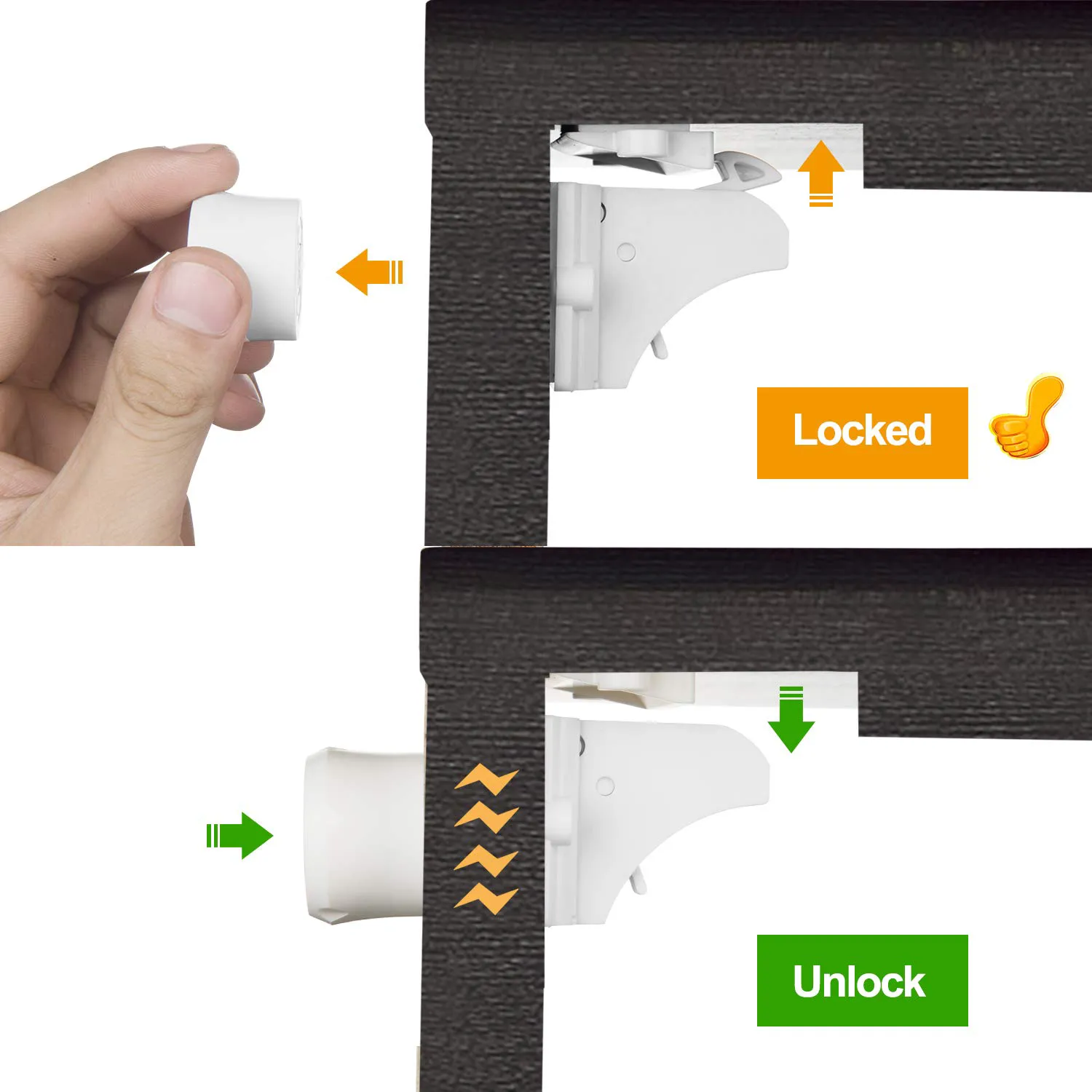
Vmaisi Baby Proofing Magnetic Cabinet Locks 12 Pack - Childproof your house
Childproof pantry mixed cabinet styles: Move high-risk items before adding latches
Baby proofing cabinet locks can help reduce access to selected storage areas, but safer storage still comes first. Before installing cabinet latches, remove high-risk products from reachable pantry zones whenever possible.
Prioritize moving or securing:
- Cleaning supplies, detergents, and household chemicals.
- Medicines, vitamins, supplements, and pet medications.
- Batteries, small hardware, twist ties, and loose clips.
- Sharp tools such as scissors, knives, skewers, graters, or replacement blades.
- Glass jars, breakable containers, and heavy bulk goods.
- Plastic bags and packaging that should be kept away from young children.
The CPSC advises keeping medicines and cleaning products in their original containers, locked up, and out of reach. It also advises storing household chemicals away from food and medications. Review the agency's childproofing guidance for homes and poison-prevention storage recommendations as part of your plan.
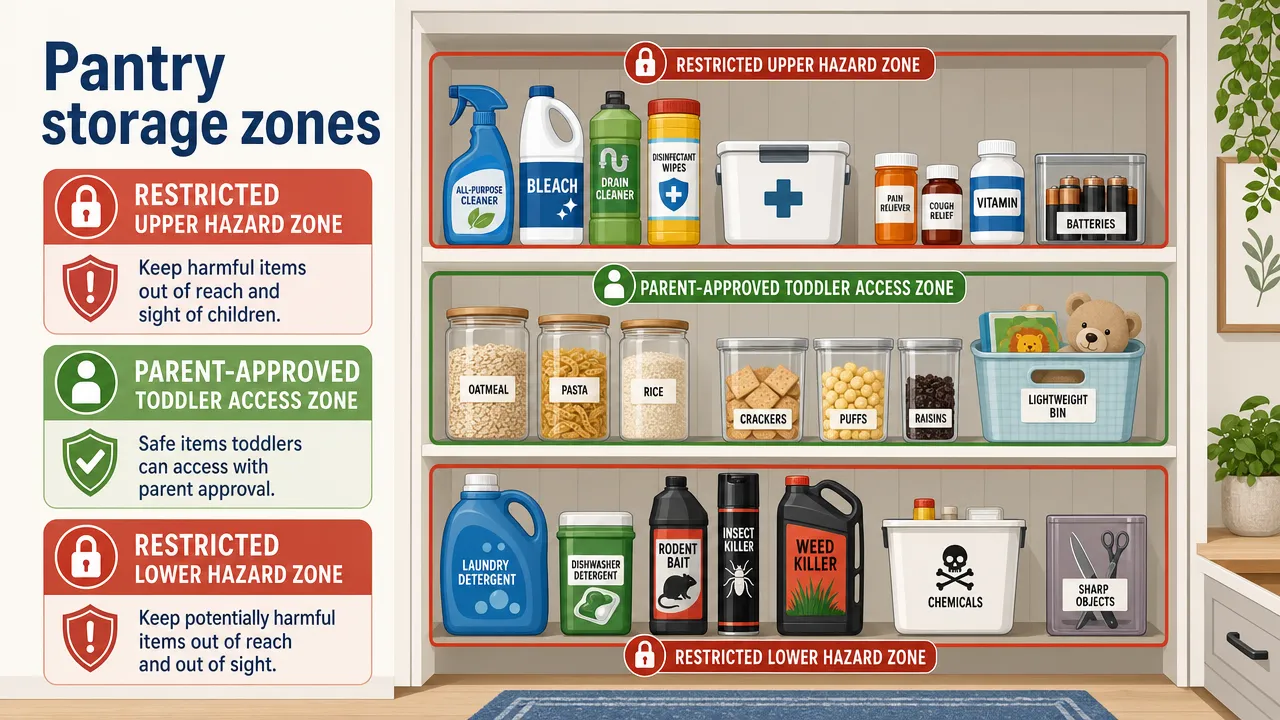
A useful setup is to divide lower pantry storage into two zones:
- Restricted zone: Hazardous, breakable, heavy, or small items that need relocation or child-safety measures.
- Parent-approved zone: Lightweight, nonbreakable, age-appropriate items you are comfortable letting your child handle with supervision.
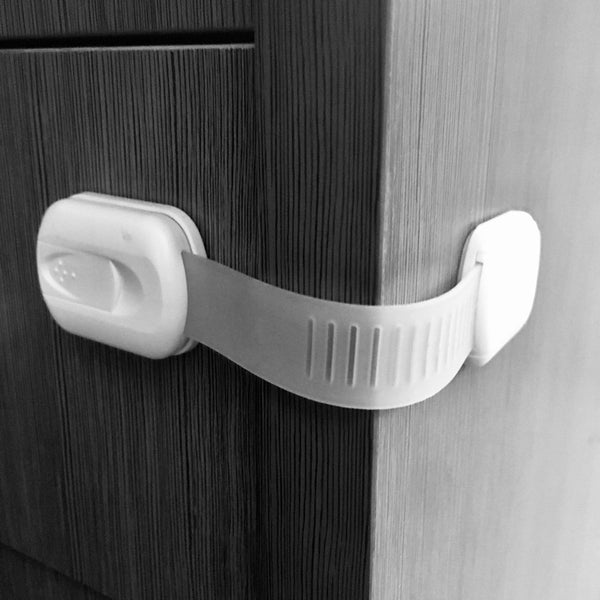
6 Pack Vmaisi Multi-Use Adhesive Straps Locks
Childproof pantry mixed cabinet styles: Match the plan to doors and drawers
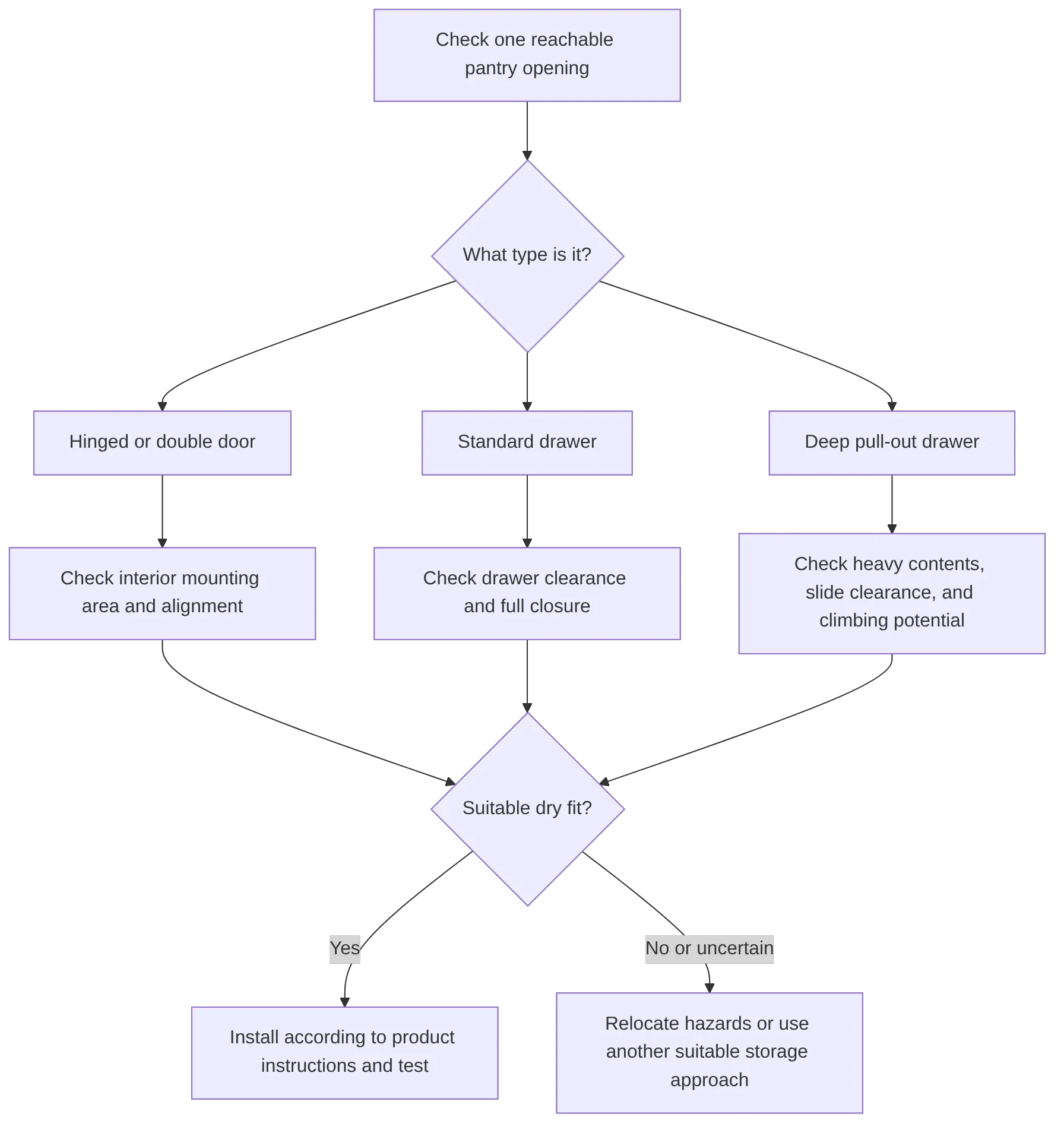
Mixed cabinet styles need opening-by-opening planning. Handle style can affect how a toddler starts opening a cabinet or drawer, but it does not determine whether internal adhesive cabinet locks will fit. Interior space, alignment, and closure clearance matter more.
Standard hinged and double-door cabinets
Check whether the cabinet has a clean, dry interior surface where the latch and catch can align. With double doors, do not assume securing one door controls access through the other. Test each door independently and confirm that the cabinet closes normally.
Standard drawers
Lower drawers often need early attention because they are simple for toddlers to pull. Drawer safety locks can be useful for compatible drawers containing sharp tools, batteries, small objects, or breakable kitchen supplies. Before installation, check the drawer box, the interior mounting space, and the full closing path.
Deep pull-out drawers
Deep pull-outs deserve extra care. Beyond their contents, they can create a climbing opportunity when opened. Move heavy jars, appliances, or bulk containers when practical, and do not force a latch into a drawer if slide hardware or limited clearance prevents reliable operation.
Childproof pantry mixed cabinet styles: Use no-drill cabinet locks carefully
For compatible cabinets and drawers, adhesive cabinet locks offer a no-drill cabinet locks option that keeps the latch hardware inside the opening. Fit is not universal, so take time to inspect each location before applying adhesive.
Use this checklist before installing child safety cabinet locks:
- Confirm there is a clean, dry, reasonably flat interior mounting surface.
- Dry-fit the latch and catch before removing adhesive backing.
- Check alignment between the fixed cabinet or drawer body and the moving front.
- Close the door or drawer slowly to confirm it has adequate clearance.
- Follow the current product instructions for pressing, setup, and testing.
- Test adult operation several times before relying on the latch.
- Inspect the setup after pantry reorganization or changes in your child's mobility.
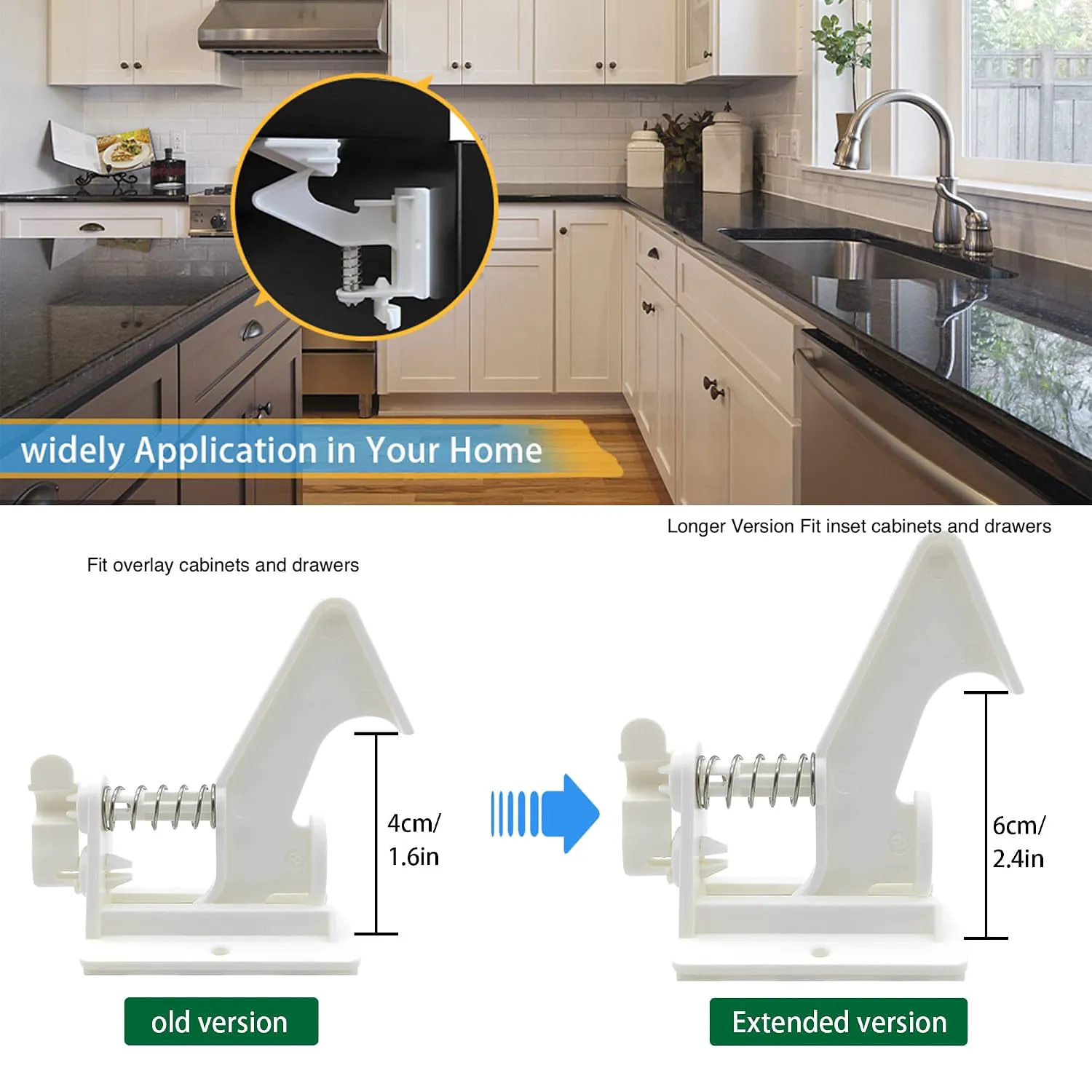
For a focused project with a smaller number of selected pantry doors or drawers, the VMAISI Cabinet Locks Child Safety Latches 12 Pack is an internal adhesive, no-drill option for compatible cabinets and drawers.
For broader coverage across a pantry, kitchen, bathroom, laundry space, or other household storage, the VMAISI Cabinet Locks Child Safety Latches 20 Pack provides a larger supply and is positioned with upgraded stronger adhesive.
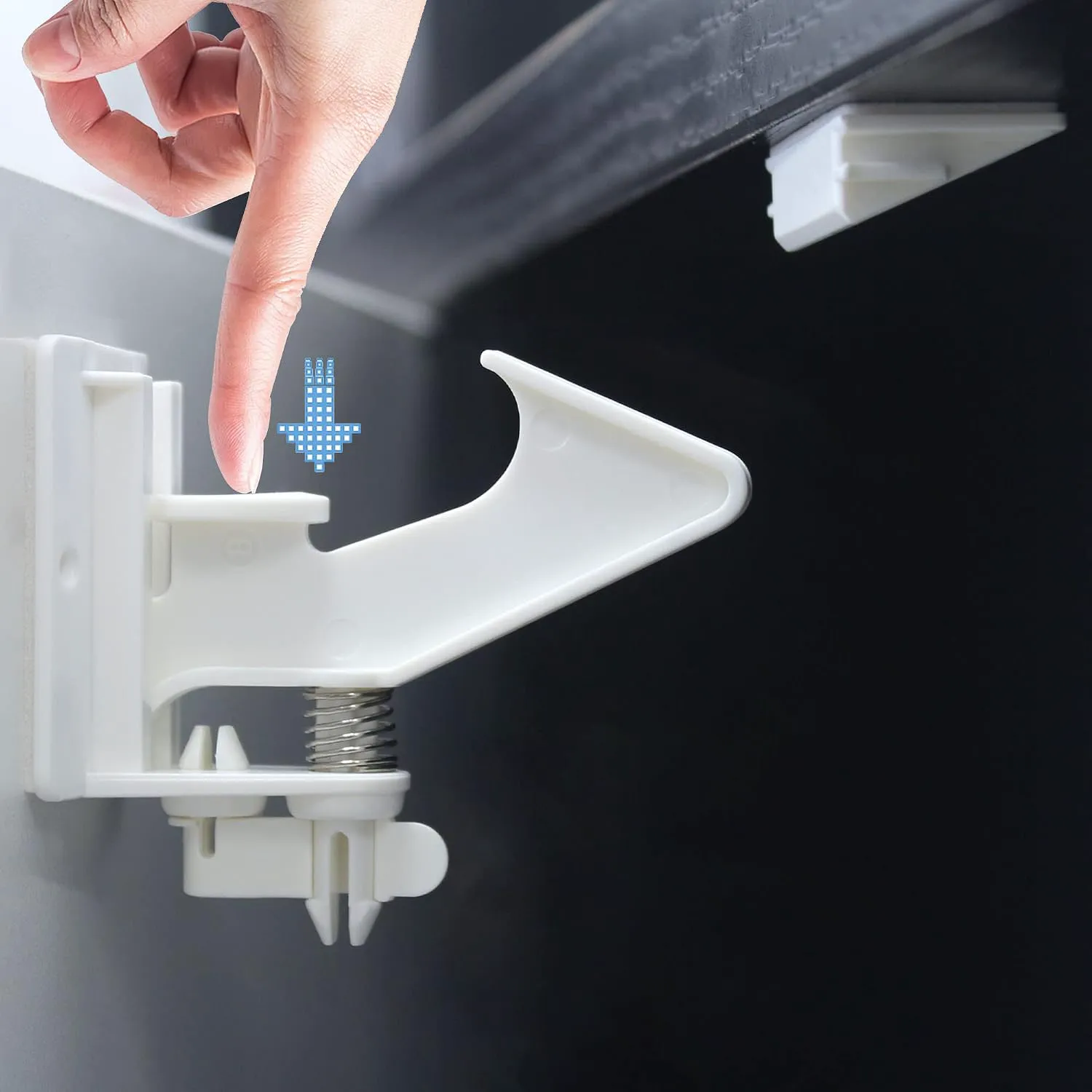
Both options use a manual spring-latch operation. An adult slightly opens the cabinet or drawer, presses the latch, and then opens it normally.
Cabinet Locks Child Safety Latches - VMAISI 12 Pack Baby Proofing Cabinet Locks
You can also review VMAISI's adhesive-latch comparison guide for additional planning considerations around surface preparation, dry-fitting, and ongoing inspection.
Childproof pantry mixed cabinet styles: Maintain a practical family routine
The best childproof pantry mixed cabinet styles plan is one your household can use consistently. Once you have moved hazards, organized zones, and added compatible cabinet latches, make pantry safety part of your regular routine.
Recheck your setup when:
- Your child begins crawling, pulling up, cruising, or climbing.
- You move cleaning products, medicines, or sharp items into the pantry.
- You reorganize drawers or add heavier bulk goods.
- A latch appears shifted, worn, or loose.
- A child discovers a new way to access a handle, pull-out, or nearby stool.
Child safety cabinet locks, adhesive cabinet locks, and drawer safety locks are useful protective layers. They do not replace careful storage choices or adult supervision. Start with the most reachable, highest-risk pantry openings, test every compatible latch, and revisit the plan as your family's needs change.