

Hypoallergenic Materials In Baby Products
Are you confused when labels like hypoallergenic, BPA-free, or eco-friendly appear on baby items, but none of them clearly explain what is actually better for your child's skin, your home's air quality, or your long-term buying decisions?
When parents shop for baby products, especially babyproofing essentials, the safest choice is rarely the one with the most marketing claims. The smarter approach is to understand which materials may reduce irritation, which certifications actually mean something, and how sustainable and certified baby safety products should be evaluated in real life.
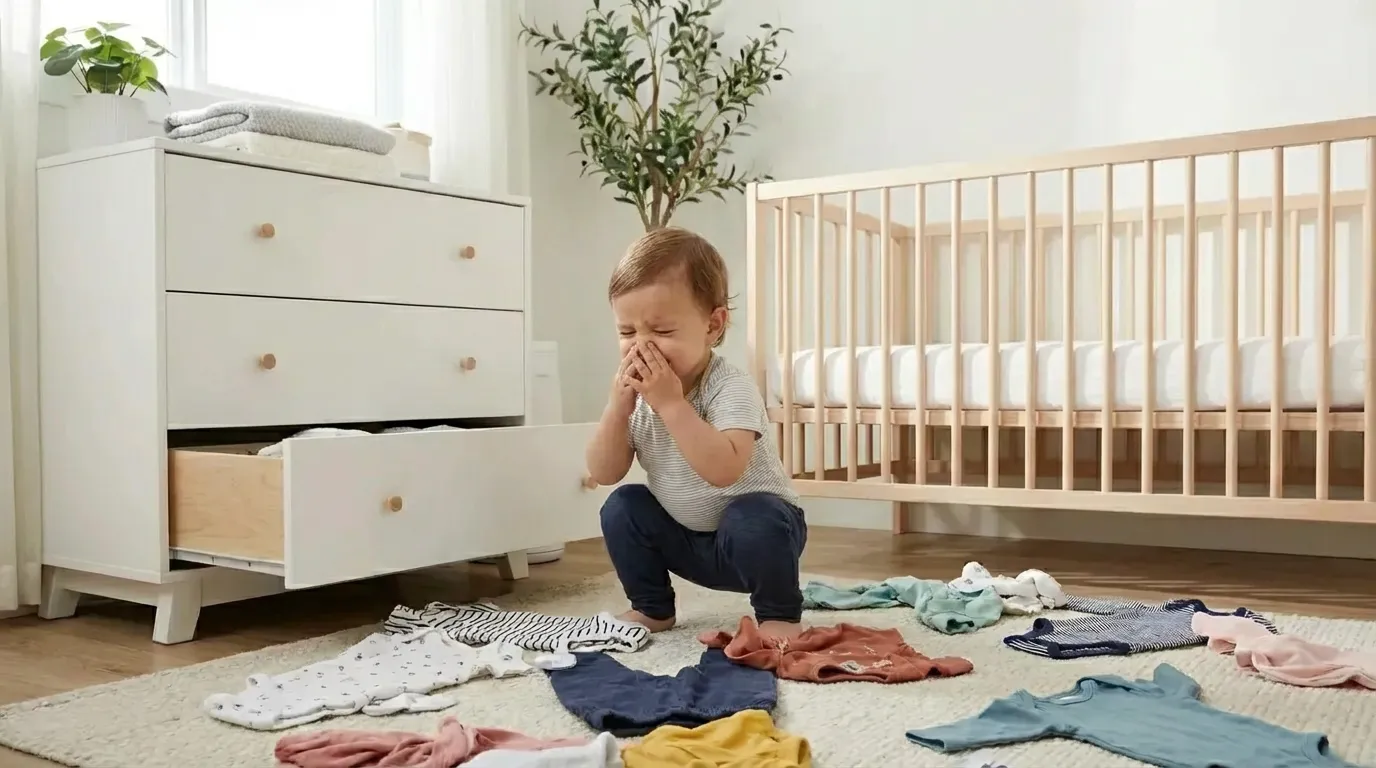
In this guide, we'll break down what hypoallergenic materials really mean, how they fit into sustainable and certified baby safety products, and what to look for if you want practical eco-friendly babyproofing without falling for vague claims.
What Hypoallergenic Materials Mean in Sustainable and Certified Baby Safety Products
The word hypoallergenic sounds reassuring, but it is not a guarantee that a product will never cause irritation or allergic reactions. According to the FDA's explanation of hypoallergenic claims, there is no federal standard governing the use of the term in cosmetics, and that same ambiguity affects how consumers often interpret it more broadly.
For parents, that means hypoallergenic materials are best understood as materials that may be less likely to irritate sensitive skin, not as proof of universal safety.
In practice, the most useful question is not ’Does it say hypoallergenic?‘ but rather:
- Does it contain fragrances or unnecessary coatings?
- Does it use dyes or finishes that may irritate skin?
- Are there VOC or off-gassing concerns from adhesives or foams?
- Is it made for skin contact, mouth contact, or general household use?
- Is there any named certification behind the claim?
This matters because sustainable and certified baby safety products should balance three things at once:
- Lower irritation potential
- Reliable safety performance
- Realistic durability and lower waste over time
A simple label cannot do all of that on its own.
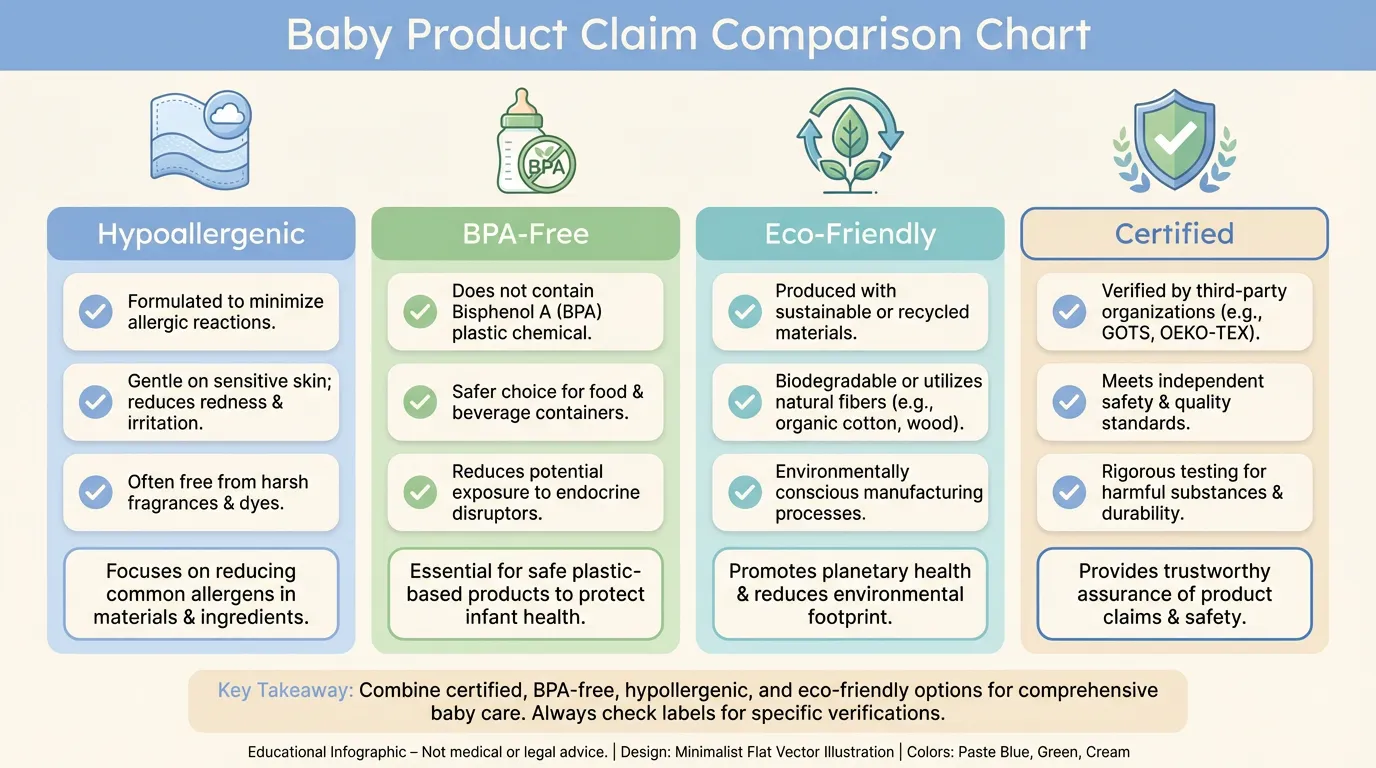
Quick reality check on common label claims
| Claim | What parents may think it means | What it actually tells you |
|---|---|---|
| Hypoallergenic | It will not cause allergies | It may be less likely to irritate, but the term is not standardized |
| BPA-free | The product is fully safe | It only tells you BPA is not intentionally used |
| Eco-friendly | Better for baby and planet in every way | Usually refers to one attribute only |
| Certified | Everything about the product has been verified | Only the specific certification scope is verified |
Hypoallergenic Materials in Sustainable and Certified Baby Safety Products: Which Materials Matter Most?
When evaluating sustainable and certified baby safety products, some materials deserve more attention than others. The best option depends on whether the product touches skin, goes near the mouth, affects indoor air, or is used for babyproofing around the home.
1. Food-grade style silicone for mouth-contact items
Silicone is often preferred for teethers, pacifiers, and feeding accessories because it is flexible, durable, and commonly marketed as one of the more practical BPA-free products. It is also generally less associated with phthalate concerns than some flexible vinyl materials.
Still, quality varies. Fillers, pigments, and manufacturing standards can affect odor and performance, so silicone is not automatically better in every case.
2. Stainless steel and glass for low-reactivity use
For bottles, utensils, and storage, stainless steel and glass are often attractive because they are durable, highly recyclable in many systems, and do not rely on BPA-related plastic claims. Glass is generally inert, while stainless steel has a strong durability story.
The tradeoff is practicality. Glass can break, and stainless steel can be heavier or cost more.
3. Organic cotton or OEKO-TEX tested fabrics for skin contact
For bibs, blankets, crib sheets, or soft accessories, fabric processing often matters more than buzzwords. Organic cotton can be a good choice, but the stronger trust signal is usually a named textile standard such as OEKO-TEX STANDARD 100 Class I or GOTS.
That is because ‘organic cotton’ alone does not tell you whether the final product avoided irritating dyes, finishes, or chemical treatments.
4. PP and PE as more practical plastics in many baby-use contexts
Polypropylene and polyethylene are often viewed as more practical plastics than PVC in many baby-use applications. They are commonly used in household and food-contact products, and they fit better into the conversation around BPA-free products than vinyl-heavy options.
But additives still matter. A plastic type alone never tells the whole story.
5. Solid wood with safer finishes when relevant
For furniture and some nursery items, solid wood can be a better fit than composite wood if emissions are a concern. If sustainability is part of your buying criteria, FSC can help verify responsible wood sourcing. Just remember that FSC says more about forest sourcing than about adhesives, paints, or finishes.
6. Materials parents often scrutinize more closely
Some materials or components deserve extra review in sensitive-use settings:
- PVC or vinyl, especially in flexible applications
- Latex, because natural does not mean low-allergen
- Foams and adhesives, due to VOC and odor concerns
- Fragranced or antimicrobial coatings that may add complexity without clear benefit
Material comparison table
| Material | Possible upside | Main caution | Sustainability angle |
|---|---|---|---|
| Silicone | Flexible, practical for mouth-contact products | Quality varies, hard to recycle in many local systems | Durable, long-use potential |
| Stainless steel | Durable, recyclable, generally inert in use | Weight, cost, coatings may still matter | Strong long-life option |
| Glass | Non-plastic, generally inert, recyclable | Breakage risk, heavier | Good if reused and not broken |
| Organic cotton | Soft and familiar for skin contact | Needs certification context | Better story when certified |
| PP or PE | Practical everyday plastics | Additives still matter | Sometimes recyclable, depends on local systems |
| Solid wood | Durable, lower concern than some composites | Finishes and adhesives matter | Better with FSC sourcing |
| PVC or vinyl | Flexible, low cost | Often linked to phthalate and odor concerns | Weak disposal and chemistry reputation |
| Foam and adhesives | Functional in some products | VOCs and off-gassing can matter | Best when durable and lower-emission |
BPA-Free Products and Other Claims in Sustainable and Certified Baby Safety Products
One of the biggest buying mistakes is assuming BPA-free products are automatically the safest choice. BPA-free is useful information, but it is only one narrow signal.
A BPA-free claim does not address:
- Phthalates
- VOCs
- Formaldehyde-related finishes
- Fragrances
- Flame retardants
- Dyes
- Mechanical safety
- Durability
That is why the best sustainable and certified baby safety products are evaluated through a wider lens.
What parents should look beyond
Low-emission concerns
If a product has foam, adhesive, composite wood, or sealed finishes, indoor air may matter as much as direct skin contact. For some nursery-related products, GREENGUARD Gold can be a useful low-emission trust signal.
Phthalate concerns
Under the CPSC framework for children's products, certain phthalates are restricted in children's products. That does not mean all plastics are equal, and it does not mean every BPA-free product addresses the full picture.
Textile irritation
For fabrics, certifications may matter more than generic language. OEKO-TEX Class I is especially relevant for babies and toddlers up to 36 months.
Latex sensitivity
Latex is a good reminder that natural materials are not always the best fit for sensitive users.
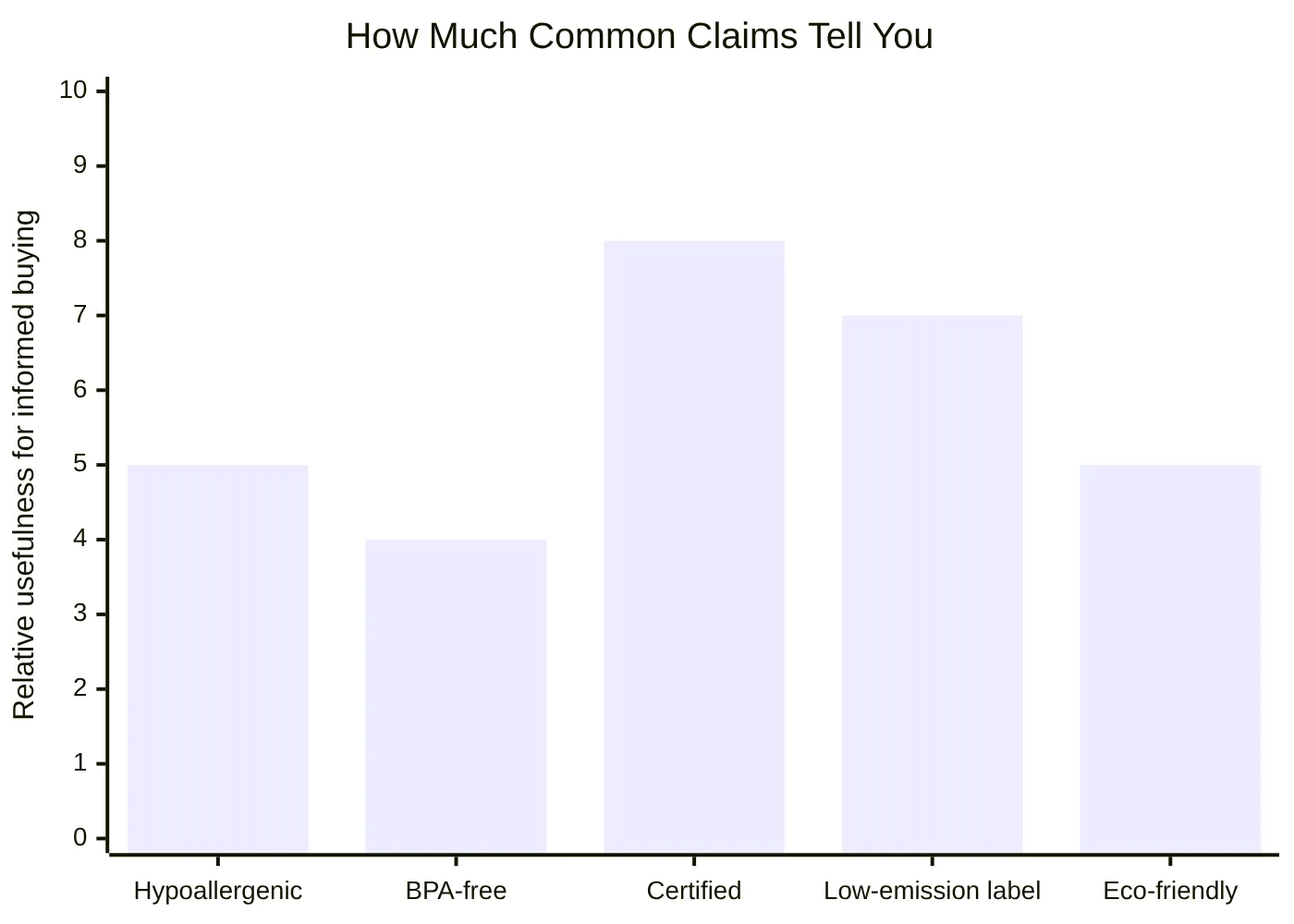
Here is a practical way to compare common claim types:
If you are babyproofing cabinets, drawers, or appliances, practical performance also matters. A latch that breaks early or peels off quickly is not just frustrating, it also creates more waste and more replacement purchases. Parents looking for no-drill, reusable options can explore Vmaisi Multi-use Child Safety Locks as a practical babyproofing category for kitchens, bathrooms, and laundry areas.
Certified Baby Safety Products: Which Certifications and Baby Safety Alliance Verification Actually Matter?
When parents search for sustainable and certified baby safety products, certified should mean something specific. The strongest trust signals are the ones tied to named standards or clearly defined testing scopes.
Certifications and standards worth knowing
| Trust signal | Most relevant for | What it may indicate | Limitation |
|---|---|---|---|
| CPSIA and CPSC rules | Children's products in the U.S. | Baseline regulatory compliance | Not a sustainability or hypoallergenic standard |
| ASTM standards | Product categories such as gates | Mechanical and category-specific safety criteria | Not full chemical screening |
| OEKO-TEX STANDARD 100 Class I | Baby textiles | Testing for harmful substances in textiles | Not a mechanical safety certification |
| GOTS | Organic textiles | Organic fiber plus processing criteria | Not relevant for every non-textile component |
| GREENGUARD Gold | Indoor air-related products | Lower VOC emissions | Does not cover everything about product safety |
| FSC | Wood sourcing | Responsible forestry practices | Not a chemistry certification |
| CertiPUR-US | Certain foam products | Foam-specific chemistry and VOC criteria | Only applies to foam components |
Where Baby Safety Alliance Verification fits
Baby Safety Alliance Verification appears to be a voluntary verification program tied to ASTM standards, federal and state laws, and some retailer requirements. It can be discussed as a supplementary trust signal, but based on the research provided, it should not be treated as a universal top-tier certification equivalent to CPSIA, OEKO-TEX, or GOTS.
That makes it useful, but limited.
A practical hierarchy for trust
- Regulatory compliance is a baseline
- Category standards help with mechanical safety
- Third-party certifications help verify specific claims
- Marketing language still needs supporting detail

If you want to continue learning before buying, Vmaisi's Helpful Ideas blog also covers practical home safety topics that connect education with everyday use.
Eco-Friendly Babyproofing and Sustainable and Certified Baby Safety Products for Real Homes
Eco-friendly babyproofing should not mean choosing the product with the greenest sounding label. It should mean choosing products that work reliably, last long enough to avoid frequent replacement, and fit your home without creating unnecessary waste or damage.
That is especially important for cabinet locks, latches, and gates.
What eco-friendly babyproofing looks like in practice
Durability over throwaway design
A product that lasts through toddlerhood, moves from room to room, or can be saved for another child is often the more sustainable choice.
No-drill installation where it suits the use case
For many homes, no-drill products reduce wall or cabinet damage and can support reuse. This is one reason parents often prefer adhesive or concealed systems for cabinets and drawers.
Lower replacement frequency
Every failed lock or latch means another order, more packaging, and more waste.
Realistic recyclable packaging
The keyword recyclable packaging matters, but it should be discussed honestly. Packaging is only truly recyclable when local systems accept it and the material is properly separated. A better content standard is to say recyclable where facilities exist rather than overpromise.
How this applies to babyproofing products
If your goal is lower-waste babyproofing for kitchens, bathrooms, fridges, dishwashers, or toilet seats, it makes sense to prioritize:
- Reusable designs
- Straightforward installation
- Durable adhesive performance where appropriate
- Product categories that solve multiple hazards with one purchase
That is where practical babyproofing options like the 6 Pack Vmaisi Multi-Use Adhesive Straps Locks can fit naturally into a lower-damage, multi-room setup. The product page highlights no-drill installation and use across cabinets, drawers, fridges, dishwashers, and toilet seats, which supports the real-world eco-friendly babyproofing goal of fewer tools, less surface damage, and broader household coverage.
Parents comparing hidden or no-screw solutions may also find the article on Magnetic Cabinet Locks without screws helpful as part of their buying research. If you are planning a broader setup, you can also look at Vmaisi Baby Proofing Magnetic Cabinet Locks 12 Pack for concealed cabinet protection.
For gate-related planning, related guidance like 5 Do's and 5 Don'ts of Baby Gates and 10 Ideas How VMAISI Baby Gate Wall Protector Help You Use Baby Gates or Pet Gates can help parents think about installation, wall protection, and long-term usability.
Practical buying checklist
Before buying sustainable and certified baby safety products, ask:
- What kind of contact does this product have: skin, mouth, air, or household surfaces?
- Is the claim a marketing phrase or a named certification?
- Are there coatings, adhesives, fragrances, or finishes that deserve more scrutiny?
- Will this product last, or will it need frequent replacement?
- Does the installation method support reuse?
- Is recyclable packaging clearly explained, or just vaguely mentioned?
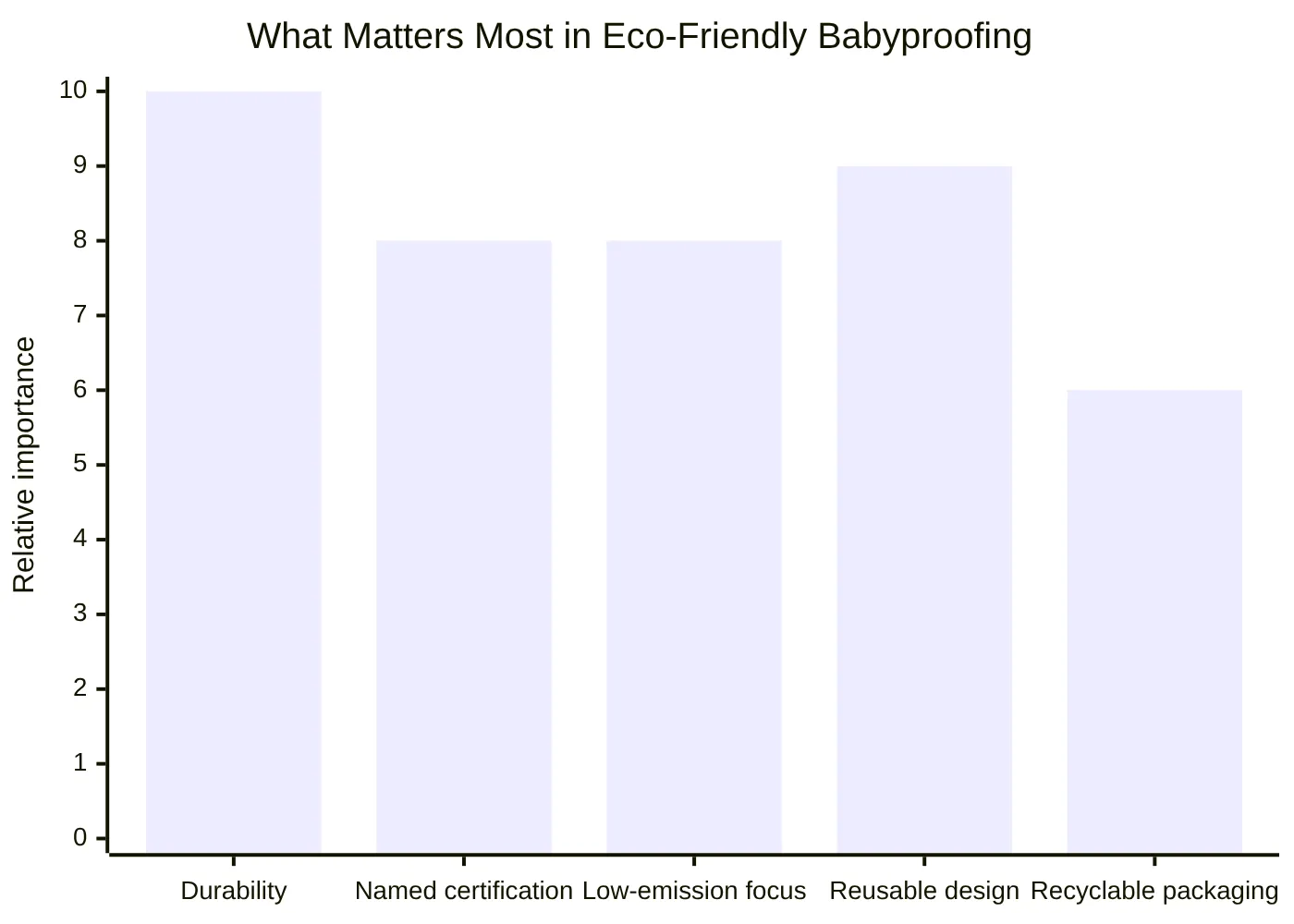
In the end, sustainable and certified baby safety products are not defined by a single perfect label. The strongest choices usually combine low-irritation thinking, appropriate certifications, practical design, and reliable use over time.
If you are shopping for everyday cabinet and appliance safety, start with product pages that clearly explain use cases and installation. A practical next step is to compare Vmaisi Multi-use Child Safety Locks and review the specific adhesive strap lock product page to see whether a no-drill option fits your home.
FAQ About Sustainable and Certified Baby Safety Products
What does hypoallergenic mean in baby products?
It generally means a product may be less likely to cause irritation, but it does not mean allergy-proof or universally safe. The term is not tightly standardized.
Are BPA-free products enough for baby safety?
No. BPA-free products only address one chemical issue. They do not automatically address phthalates, VOCs, fragrances, dyes, or product durability.
What materials are often preferred for sensitive-use baby products?
Depending on the use case, parents often look at silicone, stainless steel, glass, OEKO-TEX tested textiles, GOTS-certified organic cotton, and solid wood with appropriate finishes.
Does Baby Safety Alliance Verification guarantee a product is fully safe?
No. Based on available evidence, Baby Safety Alliance Verification appears to be a voluntary trust signal, not a universal guarantee of complete product safety.
Is recyclable packaging important when choosing baby safety products?
Yes, but it should be considered realistically. Recyclable packaging is helpful when local recycling systems accept it and when the product itself is durable enough to avoid frequent replacement.
What makes eco-friendly babyproofing practical?
The best eco-friendly babyproofing combines reliable performance, long product life, reusable or no-drill installation where appropriate, and lower replacement frequency.
If you'd like, I can also turn this into a publication-ready version with meta description, slug, excerpt, and FAQ schema.