

A Grandparents' Home Childproofing Kit for Weekend Visits
A weekend at a grandparent's home can feel familiar to the adults and completely new to a baby or toddler. Low cabinets, stairs, cords, medicine bottles, pet supplies, and small decorative objects all deserve a fresh look from the child's height.
A useful childproofing kit is not a bag of random locks. It is a short-stay plan based on what the child can do now, which rooms the family will use, and which hazards can be removed before anyone arrives. Temporary devices can help, but relocation, closed doors, safer storage, and attentive supervision usually do more of the work.
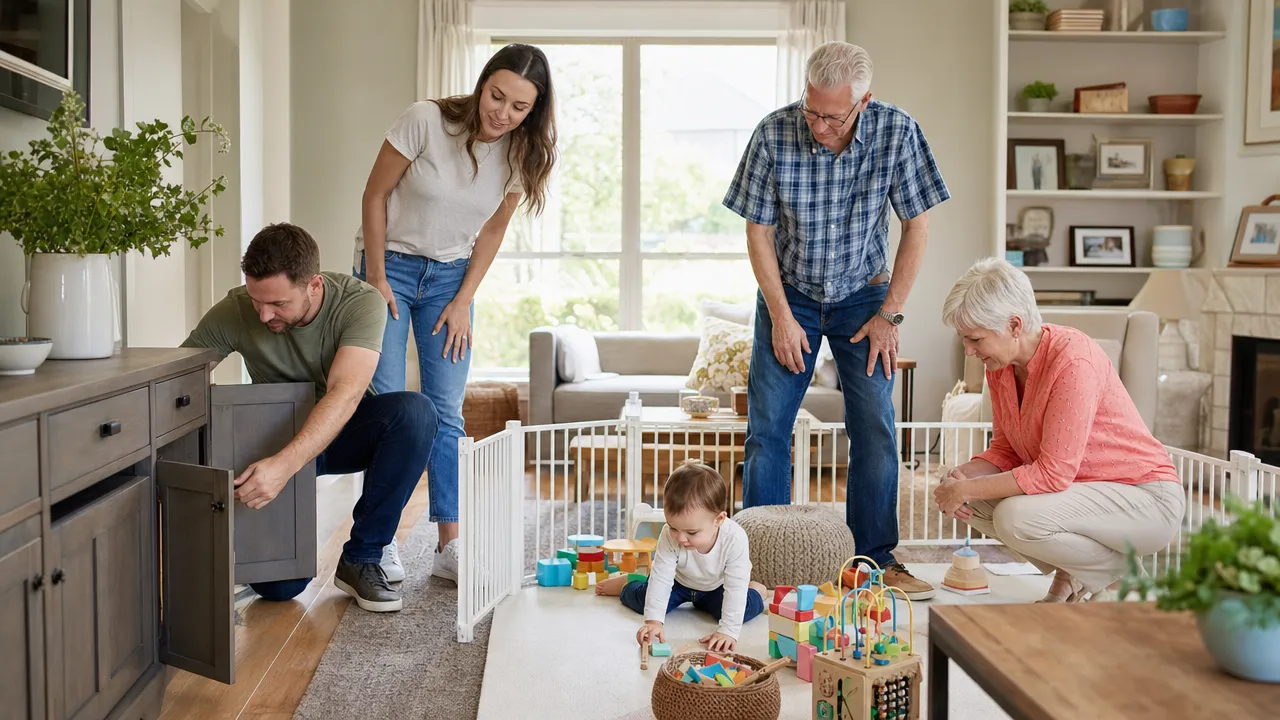
Talk through the visit before packing
Tell the grandparents about current behaviors rather than relying only on age. "She climbs dining chairs," "He can open lever handles," and "They put every small object in their mouth" are more useful than saying a child is 18 months old.
A quick video walk-through can reveal what needs attention and help you avoid bringing equipment that will not fit. Ask to see the main sleeping area, kitchen, bathroom, stairs, exterior doors, and the rooms that can be kept closed. If a gate may be needed, get the opening dimensions and the gate manufacturer's instructions before the trip.
Ask about these areas:
- Medicines, vitamins, creams, inhalers, and pill organizers on nightstands, counters, or in purses
- Cleaners, detergent packets, alcohol, tools, batteries, plastic bags, and sharp objects in low storage
- Stairs, fireplaces, pools, decks, driveways, pet doors, and exterior exits
- Blind cords, charging cables, floor lamps, power strips, and child-reachable outlets
- Television stands, dressers, bookcases, and other furniture a child might pull or climb
- Pet food, litter, toys, medication, and water bowls
- Garages, workshops, basements, laundry rooms, and other spaces that can remain adult-only
The goal is not to childproof every inch of the home for a two-day visit. Prepare the rooms the child will actually use and prevent access to the others.
Build the plan in layers
Start with actions that do not depend on a device:
- Remove small or sharp objects. Sweep floors, coffee tables, nightstands, and low shelves for coins, batteries, magnets, jewelry, decor, and older children's toy pieces.
- Relocate hazardous items. Move medicine, cleaners, knives, adult bags, alcohol, and pet supplies to a high, locked location.
- Limit access. Close and secure rooms that cannot be prepared safely.
- Add a compatible device where it solves a specific problem. Measure and test every latch, strap, gate accessory, or outlet cover.
- Supervise around the highest-risk areas. Stay close around water, stairs, food preparation, fireplaces, pets, and outdoor exits.
- Recheck after adults use the space. A relocked cabinet or cleared countertop can change during an ordinary morning.
No device is a complete solution. Adhesive can loosen, a strap can be left open, a removable cover can go missing, and a gate can be installed in the wrong location. The plan works when adults use all the layers together.
Create one adult-only landing zone
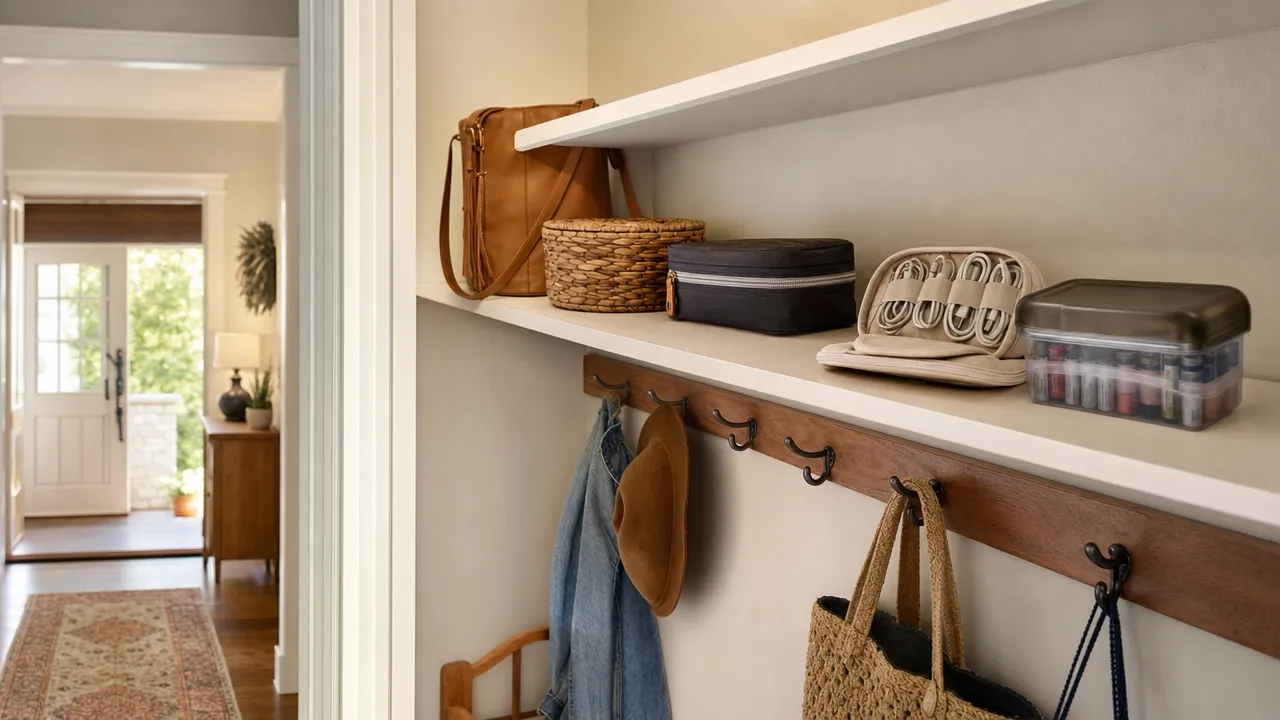
Choose a locked closet, closed office, or genuinely unreachable storage area for items adults carry into the house. Every purse, backpack, medication pouch, set of keys, charger, loose battery, and small personal item goes there on arrival.
This is one of the highest-value steps because visitors' bags change throughout the weekend. A new guest may bring medicine, gum, cosmetics, nicotine products, hand sanitizer, or loose change. Make the landing-zone rule part of the welcome routine instead of relying on everyone to remember what is inside a bag.
If a child may have swallowed a medicine, household chemical, battery, or another harmful item, contact Poison Control at 1-800-222-1222 in the United States. Follow the guidance you receive rather than inducing vomiting or waiting for symptoms.
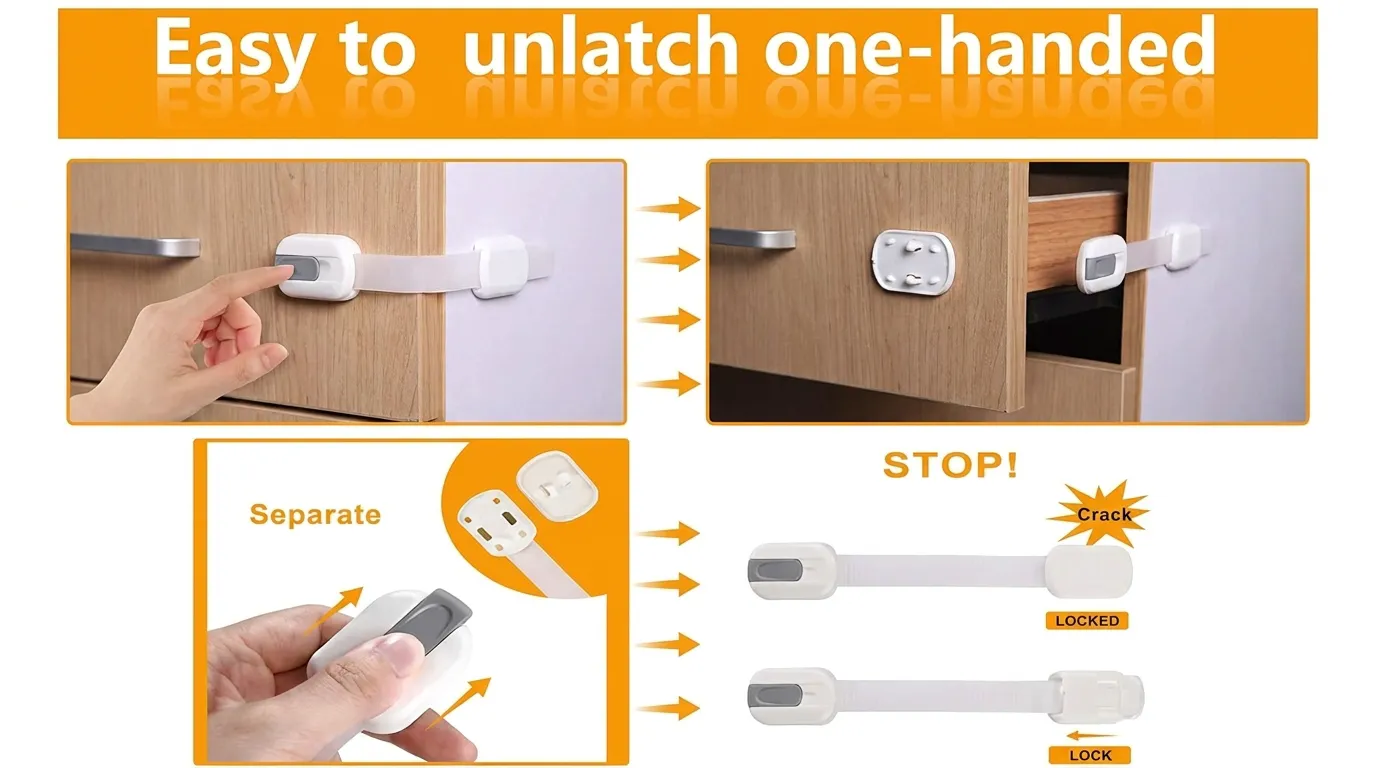
6 Pack Vmaisi Multi-Use Adhesive Straps Locks
Work through the home room by room
Kitchen and dining area
Move knives, scissors, cleaners, detergent packets, plastic bags, alcohol, matches, batteries, and breakable serving pieces out of low storage. Check the floor for dropped food, twist ties, magnets, and small caps.
Keep a young child outside the active cooking area. Place hot drinks away from table and counter edges, keep appliance cords beyond reach, and use back burners when practical. The trash can may need to be relocated or secured depending on its lid and placement.
Low cabinets require more than a quick tug on the handle. Check what is inside, how the door is built, and whether the chosen lock fits. High-risk contents should be moved even when a latch is installed.
Bathroom
Put away every medicine and supplement, including gummies, creams, and items brought by guests. Keep cosmetics, razors, cleaning products, and electrical devices beyond reach.
Empty tubs and buckets after use. Close the toilet lid, but do not treat a closed lid as a barrier if the child can lift it. Babies and toddlers require hands-on adult supervision around water, including shallow water.
Living room and bedroom
Do a floor-level sweep. Remove remotes with loose battery covers, coins, small decor, jewelry, and toy pieces. Manage lamp, blind, and charging cords so the child cannot pull or become entangled in them.
Look closely at televisions, dressers, shelving, and other tall furniture. A weekend kit cannot correct unstable furniture. If a piece is not safely secured, change the room arrangement and keep the child away from it.
Clear bedside tables of pills, eyeglasses, cosmetics, coins, and charging cables. If a bedroom cannot be prepared, close it rather than trying to solve every risk with a portable product.
Laundry room, garage, and utility spaces
For a short visit, these rooms are usually simplest to treat as adult-only. Keep the doors closed and secured. Store detergent, bleach, fuel, paint, tools, batteries, and lawn products high and locked.
Children should not play in or around washers, dryers, refrigerators, freezers, or other large appliances. Check the route from the house to the garage or driveway, especially when adults are arriving and unloading.
Stairs and exterior transitions
Clear toys, cords, and loose rugs from stair approaches. Confirm that hall and stair lighting works. Plan who is responsible for exterior doors, deck access, pools, and the driveway during busy arrival and departure periods.
Use only a gate that the manufacturer allows for the exact location. A pressure-mounted gate and a hardware-mounted gate are not interchangeable. Wall cups are accessories for compatible gates, not complete barriers, and they do not make an unsuitable pressure gate safe for the top of stairs.
Pack only devices that match a measured need
Temporary products work best when each one has a defined job. Avoid buying a large mixed kit and assuming every piece is suitable for every surface.
Internal cabinet latches
An internal adhesive latch may work on a compatible door or drawer with enough clearance, a stable mounting surface, and a usable catch point. Check hinges, drawer rails, shelves, plumbing, and stored items before installation. Test one latch first and follow the stated surface-preparation and adhesive-curing instructions.
Internal latches do not fit every cabinet. They also should not be the only protection for medicine, concentrated cleaners, knives, or other high-risk contents.
External strap locks
An external flexible strap lock can bridge two compatible surfaces on a refrigerator, dishwasher, toilet lid, trash can, drawer, or cabinet. Both adhesive bases need clean, dry, stable areas, and the placement must stay clear of appliance seals, vents, controls, dispensers, and hot zones.
The Vmaisi Multi-Use Adhesive Strap Locks are designed for selected cabinets, drawers, appliances, toilet seats, and trash cans. Confirm surface compatibility, follow the installation instructions, and reconnect the lock after every use.
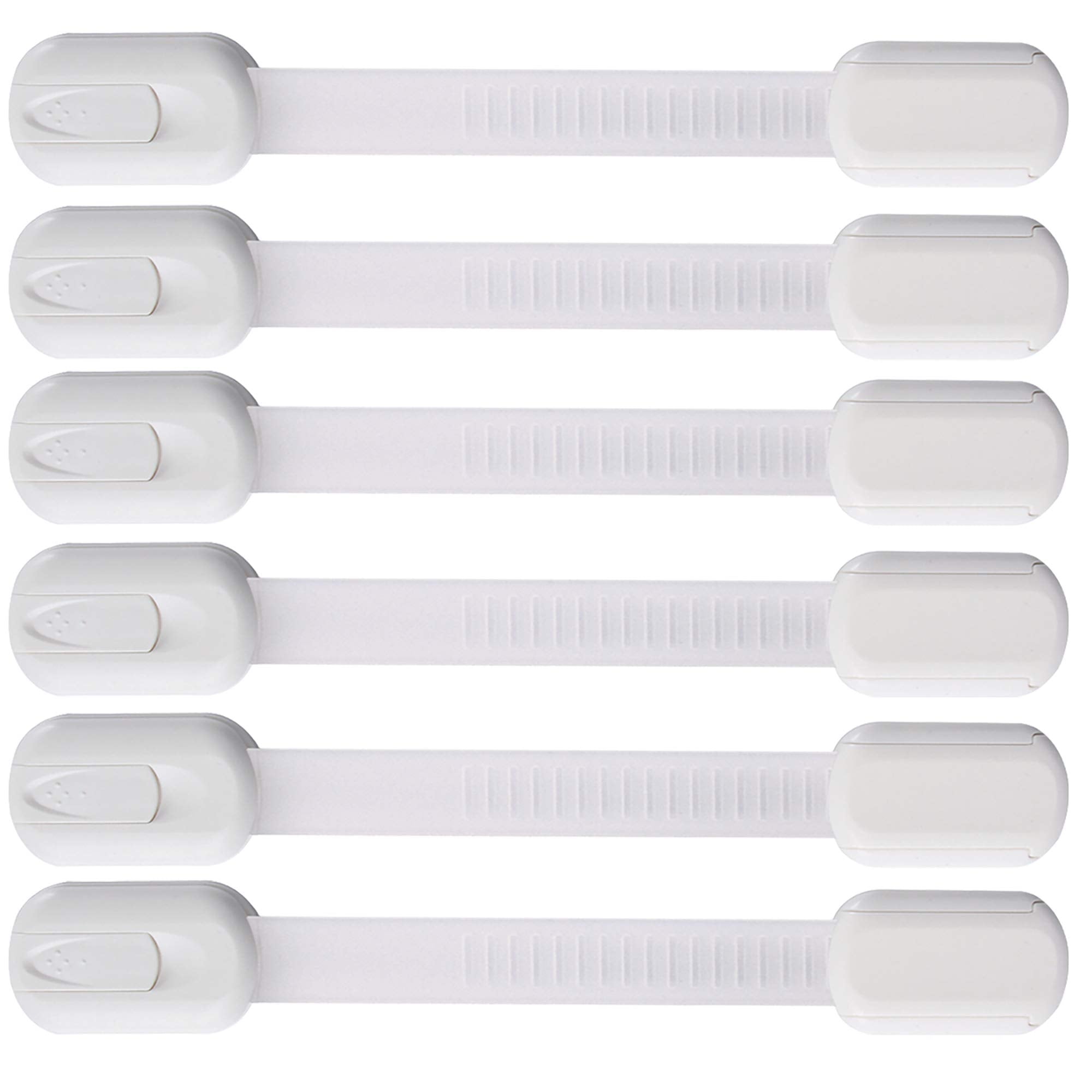
A strap lock is visible and easy for a child to pull, so inspect the adhesive edges often. Do not assume it is suitable near heat or moisture when the manufacturer does not provide a matching rating for that location.
Plug-in outlet covers
Use a removable outlet cover only in a compatible, undamaged, unused receptacle. Test each opening separately because fit may vary within one home. A loose, cracked, or easily removed cover should come out of service, and every removed cover belongs in a closed adult-controlled container.
An outlet cover cannot correct a loose, warm, scorched, buzzing, sparking, or damaged receptacle. Stop using the location and arrange for a qualified electrician when an outlet appears unsafe. For a long-term home, professionally installed tamper-resistant receptacles may be a more permanent option.
Gate accessories
Do not pack a gate based on a doorway estimate. Check the opening width, trim, baseboards, wall condition, and permitted installation location. If wall cups or replacement rods are involved, confirm their dimensions and compatibility with the exact gate.
Adding wall cups changes the usable opening width and can reduce the adjustment range available to the spindle rods. Install and test the complete gate according to its own instructions after any accessory is added.
Use a simple arrival and daily checklist
Before the child explores, confirm that:
- Floors and low surfaces are free of small objects.
- Bags, medicine, batteries, keys, and chargers are in the adult-only zone.
- Cleaners, knives, alcohol, pet supplies, and tools are secured.
- Unsafe rooms and exterior routes are closed or actively supervised.
- Gates are in their approved locations, stand vertical, and latch correctly.
- Strap locks are connected and their adhesive bases remain firm.
- Covers in unused outlets fit securely and no loose cover is within reach.
- Cords and blind cords are managed.
Repeat a shorter sweep each morning and evening. Adults may have taken medicine, charged a phone, cooked, opened a secured appliance, or welcomed another visitor. Those ordinary actions are why a weekend plan needs rechecking.
At the end of the visit, retrieve small covers and loose components, then remove or reset temporary products only as their instructions direct. Ask what worked and what caused frustration. If visits will become frequent, the grandparents may decide to make selected improvements permanent, such as safer storage, furniture anchoring, tamper-resistant receptacles, or a correctly installed stair barrier.
A good grandparents' home childproofing kit is deliberately small. It supports a plan that already includes removing hazards, restricting access, sharing responsibility among adults, and staying close enough to notice when the house or the child changes.